How Pulp Fiction was put together, who nearly said no, and why the whole industry copied it
You know the order you saw it in. It isn’t the order it happens, the order it was written or the order it was paid for.
The film opens before any image, with two dictionary definitions of the word “pulp” (roughly: a soft, shapeless mass, and cheap magazines printed on rough paper), credited on screen to the American Heritage Dictionary: New College Edition. Established the card and its credit Howley 2004Filmmaker 1994Uncertain our loose paraphrase of the wording
Here are its nine pieces, in the order you see them:
How to read the stamps.
Established authoritative or consistent sourcing. When it rests on one account or on a book quoted secondhand, a small qualifier follows it (“single source”, “secondary: …”).
Disputed sources conflict; both sides are shown.
Interpretation a critic’s, scholar’s or participant’s reading.
Uncertain unverified, or secondary-only with no corroboration.
Myth a popular claim the sources contradict.
Every stamp is followed by a source chip that links to the source. Most making-of stories come from two oral histories recorded 19 and 30 years later (VF 2013, Variety 2024): they are memories, and some are self-serving.
Not affiliated with or endorsed by the filmmakers, cast, Miramax or Disney. Photos show people at public events and do not imply endorsement.
No. 1 · Late 1980s
Three friends, three stories
Quentin Tarantino and Roger Avary were clerks at Video Archives. The first plan was an anthology film: three short crime stories by three filmmakers. The two men remember the details differently. Disputed
Avary’s account
The three were Tarantino, Avary and their friend Adam Rifkin. Avary’s boxer story, Pandemonium Reigns, grew to feature length; Tarantino’s segment grew into Reservoir Dogs; Rifkin never wrote his. Variety 2024
Tarantino’s account
An “omnibus” of three stock crime plots: he would write the hit man who takes out the boss’s wife, Avary the boxer who won’t throw the fight, “another friend” the third. When that writer “didn’t materialize”, Tarantino started it himself, and it became Reservoir Dogs. VF 2013
Hit man and the boss’s wifeTarantino
Boxer who won’t throw the fightAvary → Pandemonium Reigns
Third storyRifkin (Avary) · “another friend” (Tarantino)
One of the three segments grew into Reservoir Dogs (1992). Which one depends on who is telling it.
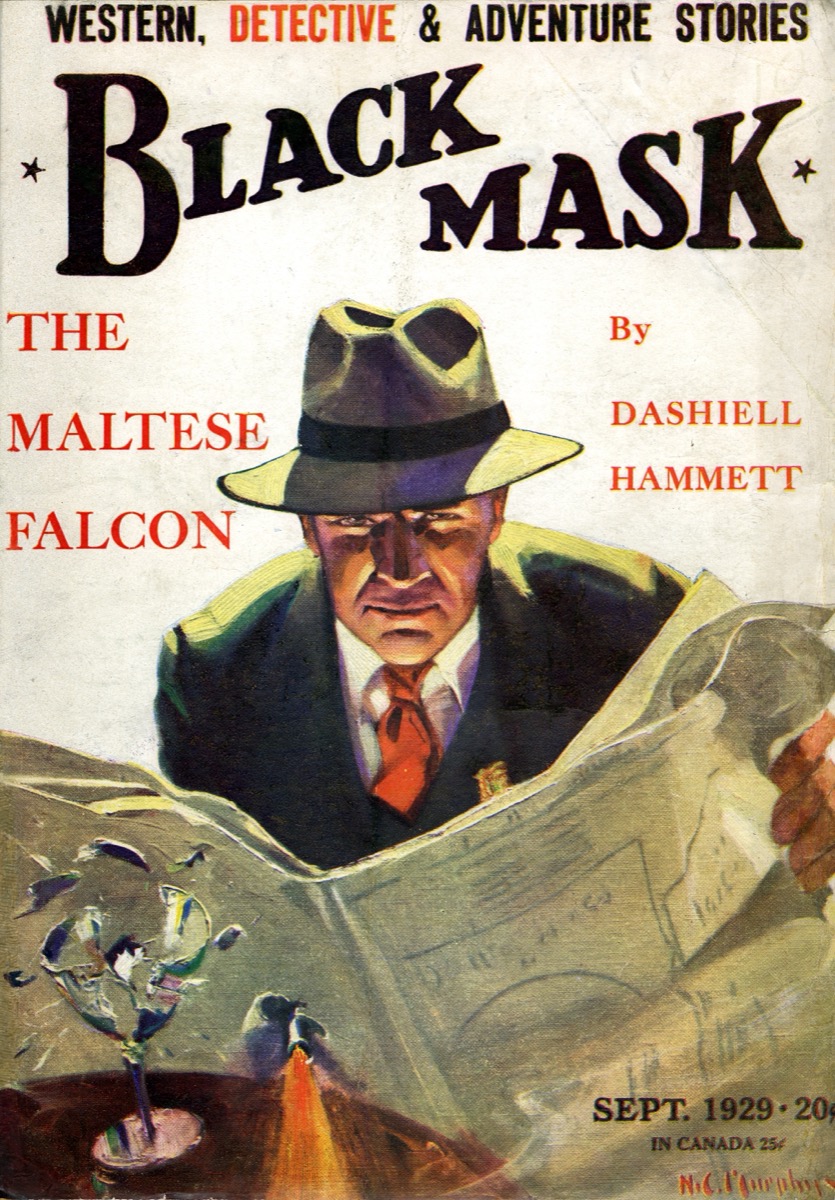
The title comes from pulp magazines. Tarantino said he wanted “to do a Black Mask movie — like that old detective story magazine”, and that “it kind of went somewhere else.” EstablishedFilmmaker 1994 He told Vanity Fair he meant stories like Chandler’s and Hammett’s in 1920s–30s pulps: “That is why I called it Pulp Fiction.” VF 2013
Was “Black Mask” ever a formal working title for the screenplay? The primary sources don’t say. UncertainFilmmaker 1994
Black Mask, September 1929, the issue that began serialising Hammett’s The Maltese Falcon. Cover art: H. C. Murphy. Public domain. Scan courtesy James Madison University Special Collections, via Wikimedia Commons. Resized.
No. 2 · 1992 to May 1993
The Amsterdam floor
Reservoir Dogs played the Sundance film festival in January 1992, then a midnight screening out of competition at Cannes that May. Afterwards Tarantino, Stacey Sher of Jersey Films (section 3) and Avary drove to Tarantino’s flat in Amsterdam. EstablishedVF 2013
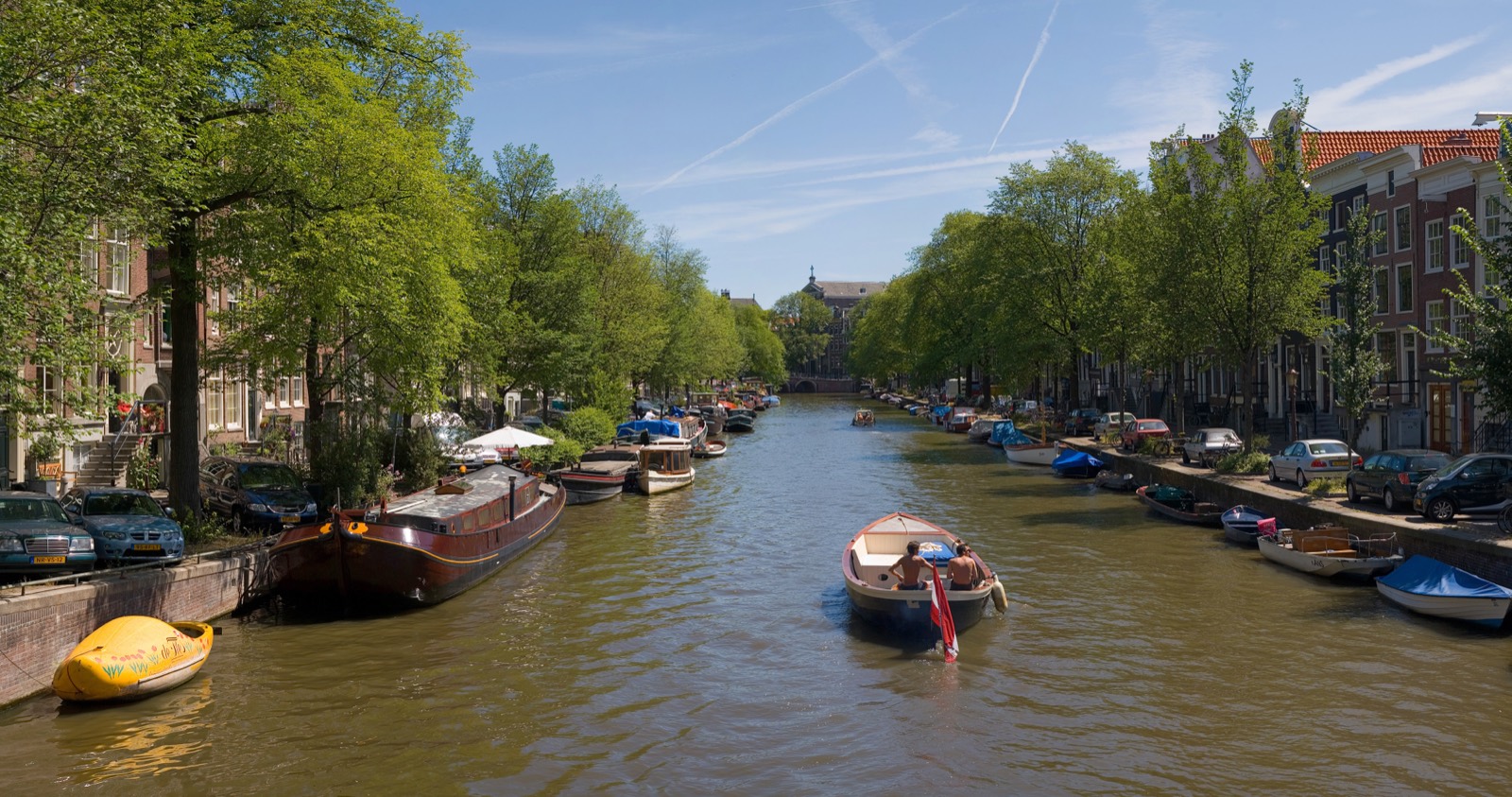
Tarantino wrote there for about three months, off and on, in a one-room flat by a canal with no phone, in school notebooks. He left in late 1992. Sher heard “pretty much the whole first act” there, and Avary and Tarantino worked on the second act. The film’s producer, Lawrence Bender, remembers Tarantino listening to Dick Dale’s “Misirlou” on a Walkman while he wrote. EstablishedVF 2013Variety 2024
Generic context only: an Amsterdam canal in 2006. This is not Tarantino’s building. Photo: David Iliff (Diliff), CC BY 2.5, via Wikimedia Commons. Resized.
“We basically took all the scenes we had ever written and just laid them out on the floor, seeing how they fit.” Roger AvaryEstablished Avary’s account Variety 2024VF 2013
Some pieces are traceable. The Gold Watch story came from Avary’s Pandemonium Reigns; Tarantino and Avary reworked it and merged in the cab driver Esmarelda from Curdled, a short film Tarantino saw at a festival in Italy. The actress Angela Jones confirms Tarantino called her to play the role again. EstablishedVariety 2024 pt 2 Which other old scenes went in is not documented in a primary source, so this guide doesn’t name any.
The typist Linda Chen helped cut the handwritten draft down to 159 pages. The cover read “MAY 1993 LAST DRAFT”. (Danny DeVito remembers the envelope as 155 pages.) Amanda Plummer’s character, Honey Bunny, is named after Chen’s pet rabbit. Established Chen’s account VF 2013Variety 2024
The official writing credit splits the job in two:
Screenplay byQuentin Tarantino
Stories byQuentin Tarantino & Roger Avary
EstablishedOscars.org Both men received the Oscar for Original Screenplay in 1995 (section 7).
How that split was reached is disputed. Disputed
Biskind’s book, as summarised by VF
During production Tarantino’s attorney asked Avary to take a “story by” credit instead of co-writer. Avary refused, was told his section would otherwise be written out, then signed in exchange for a share of profits and felt betrayed. Tarantino “reportedly paid him $25,000” for the boxer story. Tarantino’s view: “He didn’t write the script.” VF 2013
Avary, 2013 and 2024
In 2013 Avary “doesn’t recall any of this.” In 2024 he said there were no conflicts over credit: “Neither of us were in the Writers Guild at that time.” VF 2013Variety 2024
Interaction A
The Floor: rebuild the story order
This is the finished film’s structure. Nobody recorded how the scenes were laid out on the Amsterdam floor.
Put the nine pieces in the order the events happen. Clue threads are before/after links you already know from the film. The story order is Dana Polan’s reconstruction. Established scholarly reconstruction Polan (Salon 2018)Bordwell 2014film transcript
Keyboard: focus a piece, press Space to pick it up, ←/→ (or ↑/↓) to move it, Space to drop, Esc to cancel. Or use the Earlier/Later buttons. Dragging with a mouse also works.
Threads met –/7 (tick “Show clue threads” to score)
P4 ⇄ P6Date first, or the same night. Paul says at the bar that Vincent is taking Mia out “tomorrow”, so the date is the night after the diner and the bar. The fight is that same night or later; the film doesn’t say. It can’t be earlier: Vincent is alive for the date and dies the morning after the fight. Both card orders count, because if the two happen on the same night neither is simply “before” the other. Established the line film transcriptInterpretation the timing is inferred from it Polan
No. 3 · Dec 1991 to Sept 1993
Who says yes?
It wasn’t studio-free, and it may not have been a bidding war
Jersey Films and TriStar
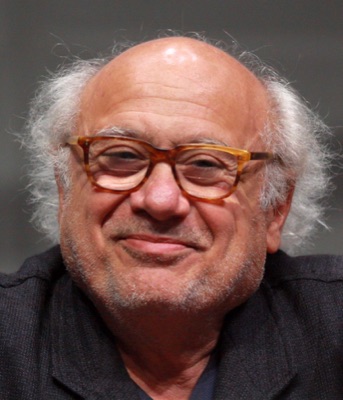
Stacey Sher, soon president of production at Danny DeVito’s production company Jersey Films, met Tarantino at the Terminator 2 premiere in 1991 and introduced him to DeVito. DeVito offered a deal for “your next movie, whatever it is” before he had seen Reservoir Dogs. Jersey was run by DeVito and Michael Shamberg. EstablishedVF 2013LA Times 1993
Jersey had a first-look deal with the studio TriStar. In December 1991 TriStar made a deal, reported at about $900K, for Tarantino to write and direct Pulp Fiction, paying for its development. EstablishedVariety 1993
TriStar says no
In June 1993 TriStar declined to make it. It “feared it could be hard to market” and wanted bigger mainstream films; the LA Times called it “an under-$10 million movie”. TriStar’s chairman Mike Medavoy recalls warning that the shooting in the back of the car was “over the top.” Shamberg: “Mike thought it was too violent.” The rights went back to Jersey: turnaround. EstablishedLA Times 1993VF 2013Variety 2024
Miramax, already Disney’s
Miramax, run by Harvey and Bob Weinstein, was an independent filmdistributor. Weeks earlier, around April 30 to May 1, 1993, Disney had bought it; the Weinsteins kept operating control. EstablishedLA Times 1993Variety 1993 The price was never confirmed: Disputed the LA Times estimated $60 million, Variety $60–65 million, Time and Vanity Fair $80 million. LA TimesVarietyTime
The script reached Miramax through Richard Gladstein, an executive producer of Reservoir Dogs who was by then at Miramax. Harvey Weinstein called about the first scene: “Does it stay this good?” He says he cleared it with Disney’s Jeffrey Katzenberg though he didn’t need to. Katzenberg: “Easy on the heroin scene, if you can, but that is one of the best scripts I have ever read.” Established Weinstein’s account VF 2013
A bidding war?
Bender says “every major studio passed,” and Shamberg says New Line’s Bob Shaye regrets turning it down. Whether anyone bid against Miramax is contested. Disputed
Michael Shamberg (producer)
“Only Harvey bid on it. Harvey thought he was in a bidding war, but he wasn’t.” Variety 2024
Mike Simpson (Tarantino’s agent)
He told the Weinsteins, “We’ve got two other buyers waiting,” and says Live Entertainment’s Ronna Wallace tried to disrupt the call. Variety reported in 1993 that “several other production companies are bidding.” VF 2013Variety 1993
The terms, and who paid
The negotiated terms included final cut, a running time of about two and a half hours, and final choice of actors. DeVito says Jersey passed its own final-cut and cast-approval rights on to Tarantino. EstablishedVF 2013Variety 2024
The budget was about $8–8.5 million. Bender: it “was $8.5 million with contingency… we returned $500,000 and it was exactly $8 million.” The Numbers lists $8,000,000. These are producer-reported, not audited, which is normal for films. Disputed small range Variety 2024The Numbers
Miramax reportedly got its $8.5 million back before shooting began, by selling the foreign rights for $11 million after Bruce Willis signed on: foreign pre-sales. Established single source VF 2013 Peter Biskind says the William Morris agency “more or less packaged” the film, since most of the talent were its clients: agency packaging. Established secondary, authoritative BFI/Biskind 2004
Step through the dates. Black arrows carry the script, red arrows money, dashed arrows rights. Decide for yourself how “independent” it was.
Ledger (US$ millions, reported)
Development~0.9
Budget8–8.5
Foreign rights11single source
At this date
What happened
Who held the script
Who was paying
Evidence
No. 4 · 1993
Who almost played whom
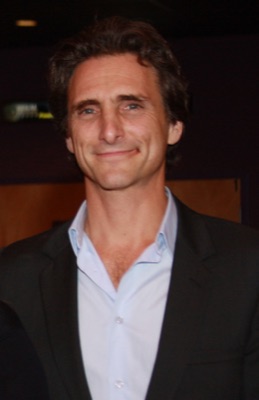
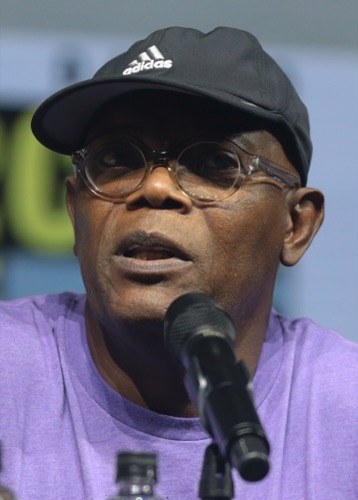
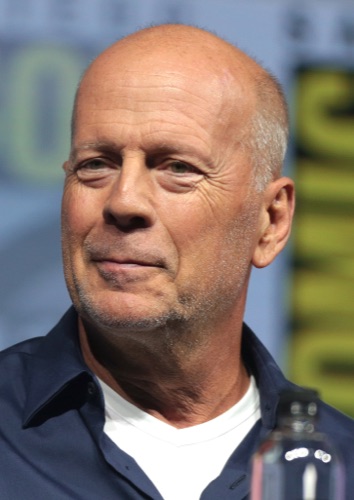
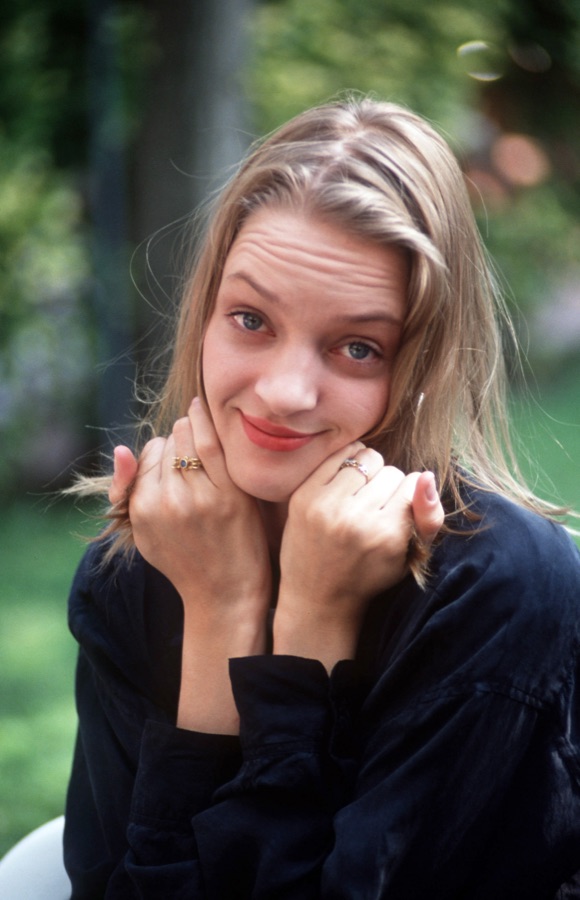
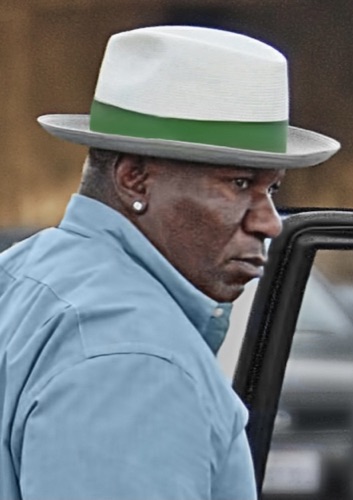
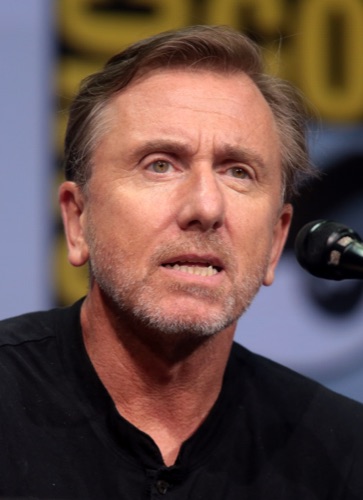
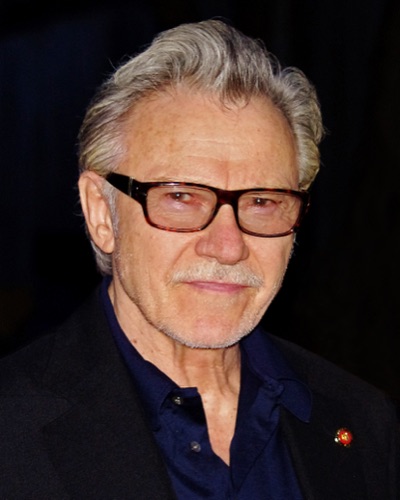
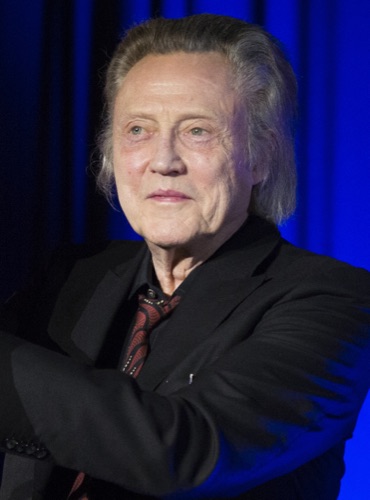
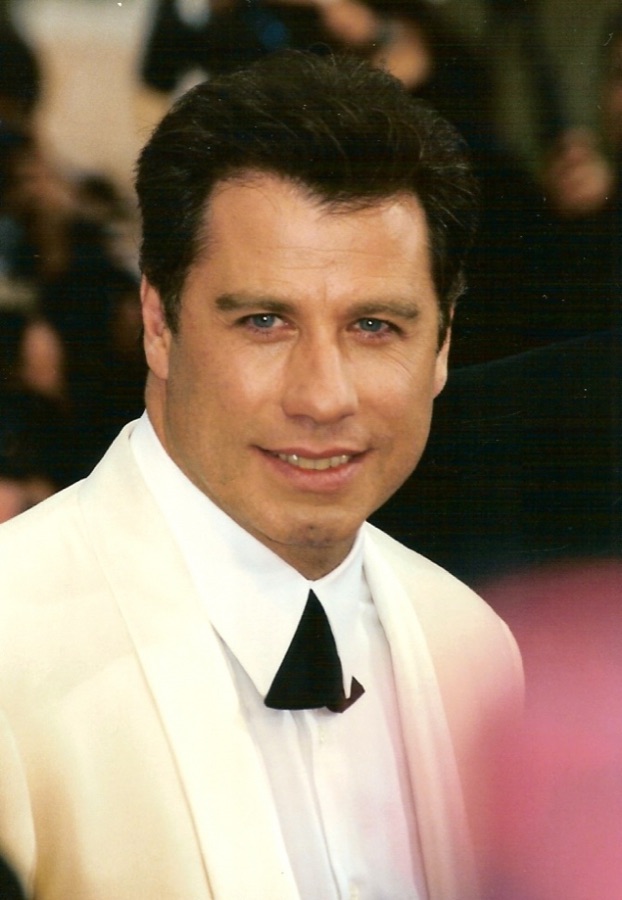
A casting ledger. Only near-misses with a source are listed. Photos are of the actors years later, at public events, and are dated. VF 2013Variety 2024
Vincent Vega John Travolta
Almost: planned for Michael Madsen (Vic Vega in Reservoir Dogs), who had committed to Wyatt Earp. Harvey Weinstein approved the whole cast list except Travolta and pushed Daniel Day-Lewis, Sean Penn and William Hurt. The agent Mike Simpson says Day-Lewis and Willis both wanted Vincent. Simpson forced it with a “15 seconds” ultimatum; Bob Weinstein said “we have to say yes.” Travolta hesitated to play a heroin user. EstablishedVF 2013Variety 2024
Almost: Paul Calderon’s New York audition nearly won it. Jackson flew back and “blew the doors off” (Bender), arriving with a burger and a drink (Gladstein). Calderon got a small part as Paul, the bartender. EstablishedVF 2013
Laurence Fishburne declined Jules. Why is disputed: Tarantino (2020) says it wasn’t a leading-man part; Fishburne (2020) says it was the “cavalier” treatment of heroin, and “It is a leading-man part.” DisputedThe Ringer 2020Independent 2020
Written for whom? Tim Roth says the character Tarantino “was writing for me” became Butch. Avary says he wrote the boxer for Matt Dillon; Simpson says Butch was promised to Dillon, who asked to “sleep on it” and was dropped. DisputedVariety 2024Variety pt 2VF 2013
Willis came in through his Malibu neighbour Harvey Keitel, at a barbecue (VF) or on a beach walk (Bender). Tarantino: “Bruce Willis made us legit.” EstablishedVF 2013
Venice Film Festival, Sept 1994. Not a Pulp Fiction event: the film didn’t show at Venice. Gorupdebesanez, CC BY-SA 3.0, via Wikimedia Commons. Resized.
Mia Wallace Uma Thurman
Bender says Mia was the one role Tarantino couldn’t picture, and “at first he didn’t even think [Uma] was the right person.” VF says Tarantino “had decided on Uma Thurman,” with Michelle Pfeiffer, Meg Ryan, Holly Hunter and Rosanna Arquette “reportedly considered.” DisputedVariety pt 2VF 2013 Thurman hesitated, mainly over the scenes of the Gimp and the rape. EstablishedVF 2013
Almost: Tarantino first considered Max Julien (The Mack), who Jackson says wouldn’t do the rape scene. Rhames welcomed it as a rare chance to play vulnerability. The bandage on his neck covered a real cut, and Tarantino kept it. EstablishedVF 2013
Roth took Plummer to the Fisher King premiere, met Tarantino there, and asked to be in a film with her holding a gun. Tarantino wrote the parts. EstablishedVariety 2024VF 2013
Tarantino’s mentor from Reservoir Dogs. A clash with another film meant his scenes were shot on a Sunday, and the crew agreed to it (section 5). EstablishedVariety pt 2
An eight-page monologue, shot with a small crew in a real house on the last day of filming (section 5). EstablishedVF 2013Variety pt 2
The pay: everybody got the same
Bender’s formula paid every cast member the same weekly rate: “$20,000 a week.” Travolta worked about seven weeks, so about $140,000, and major cast members also shared a profit share. Willis took “a drastic reduction” from his usual fee; the sources don’t give the number. Nobody worked “for free.” EstablishedVF 2013
No. 5 · Sept 20 to Nov 30, 1993
Fifty-one days
Principal photography ran from September 20 to November 30, 1993: a “51-day shoot” with about 70 locations and sets, starting at the Hawthorne Grill, the diner. The crew was non-union. EstablishedVF 2013 Bender says Tarantino shot on “the slowest film Kodak made” so the film would look like it cost $25 million; it needed very bright lights, and they worried the heat would crack the diner’s glass. Established the claim Uncertain which stock VF 2013
Each card below is tied to a piece of the Floor. Shooting dates are given only where the sources give them.
P1 + P9 · Diner
Shot: first week, from Sept 20
The prologue and the epilogue were filmed in the same week, at the start of the shoot, at the Hawthorne Grill. EstablishedVF 2013
P2 · Brett’s apartment
Shooting date not in sources
The apartment interior and the elevator were sets. The real building whose hallways they walk through collapsed in the 1994 Northridge earthquake. EstablishedVariety pt 2
P2 · Jules’s hair
Shooting date not in sources
A production assistant sent for an Afro wig came back with a Jheri curl. Tarantino rejected it; Jackson loved it. EstablishedVF 2013Variety pt 2
P2 + P3 · The briefcase
Shooting date not in sources
The glow was “two batteries and a lightbulb” (Jackson). Originally it held diamonds, Avary told Roger Ebert; that seemed too boring. Tarantino has said there’s no official explanation: it’s a MacGuffin. Established the prop: Jackson’s account; diamonds and MacGuffin: secondary, Snopes citing Ebert and Barnes VF 2013Snopes The “Marsellus’s soul” theory traces to a chain email. MythSnopes
P4 · Jack Rabbit Slim’s
Shooting date not in sources
The restaurant interior was a set built in a Culver City warehouse; the outside was a Googie-style bowling alley due for demolition, trimmed with neon. The wrap party was held on the set. EstablishedVF 2013Variety pt 2
P4 · The dance
Shooting date not in sources
Written before Travolta was cast. The Twist was Tarantino’s idea; Travolta added the Swim, the Batman and the Hitchhiker and taught Thurman the steps, while Tarantino filmed handheld and called them out. Travolta says the style came from Godard’s Bande à part. EstablishedVF 2013Variety pt 2
P4 · The crash at Lance’s
Shooting date not in sources
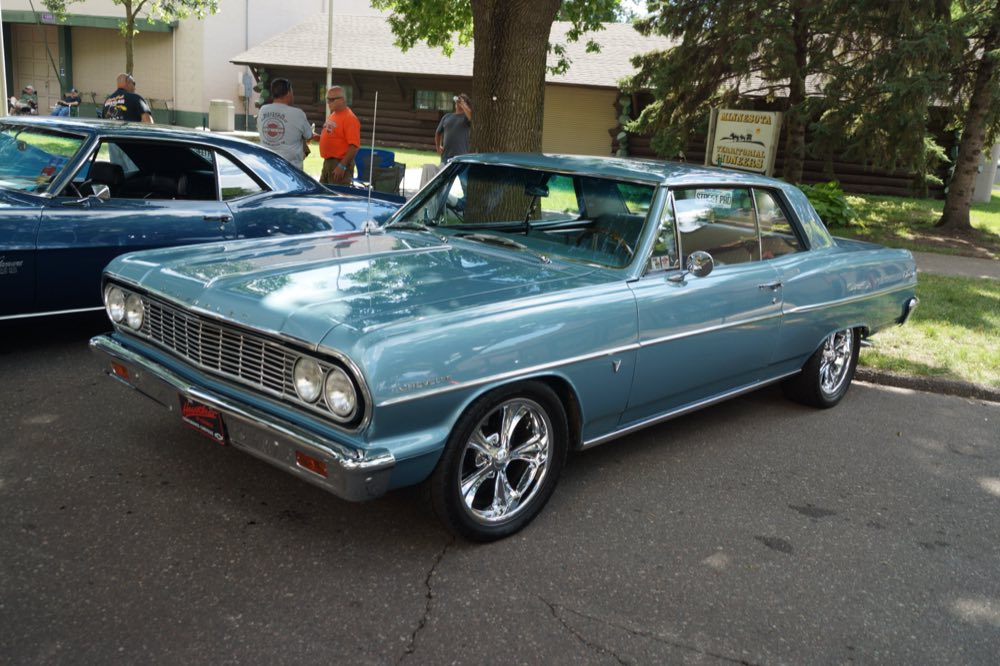
There was only one pristine Chevy, so the art department built a knocked-down porch and “pre-set” the car as if it had crashed. Tarantino operated the camera. EstablishedVariety pt 2
A 1964 Chevelle Malibu: the same model, not the film car. Photo: Greg Gjerdingen, CC BY 2.0, via Wikimedia Commons. Resized.
P4 · Mia’s overdose
Shooting date not in sources
The foam was Campbell’s mushroom soup, and the powder in close-ups was sugar. A friend and former addict, Craig Hamann, advised on the drug scenes. EstablishedVF 2013
P4 · The adrenaline shot
Shooting date not in sources
Filmedneedle pulled away
Shownrun backward
Travolta pulled the needle away and the footage was run backward, cut so fast that no impact is seen. Established secondary: Jason Bailey’s book, quoted by the NY Post NY Post 2014
P5 · Koons
Shot: last day, Nov 30
Christopher Walken’s scene was shot on the final day with a small crew in a real house. When the child actor got sleepy, Walken delivered the rest “into the lens.” EstablishedVF 2013Variety pt 2
P6 · The cab ride
Shooting date not in sources
Esmarelda’s cab used rear projection with old archive plates Tarantino chose. EstablishedVariety pt 2
P7 · The pawnshop
Shooting date not in sources
The upstairs was a real shop in the Valley. The basement was a set: “there are no basements in the valley.” EstablishedVariety pt 2
P8 · Marvin
Shooting date not in sources
Marvin was meant to be shot twice, on purpose; Travolta objected that audiences would hate him, so it became one accidental shot. A rigged bust of the actor, spraying “tons of brain”, was filmed as bargaining material for the ratings board, so that other things could stay. The film is rated R. Established Phil LaMarr’s account Variety pt 2The Numbers
P8 · The Wolf
Shot: on a Sunday (date not given)
Keitel had a clash with another film, so his scenes were shot on a Sunday, and the crew agreed. EstablishedVariety pt 2
No. 6 · Chosen, not composed
No score, just records
No traditional score was commissioned. The film is built from existing surf, rock ’n’ roll, soul and pop records: needle drops, several of them diegetic. EstablishedGrammy.com
Tarantino’s handwritten notes listed “five or six potential songs for each music cue”; Chuck Berry’s “You Never Can Tell” was his first choice for the dance (Mary Ramos, music department). The music supervisor Karyn Rachtman went through his record collection to get titles right. He wanted songs other films hadn’t “christened,” and had “Son of a Preacher Man” in his head “for six or seven years.” EstablishedGrammy.comVariety 2024Rolling Stone
diegetic (characters play or hear it) not marked diegetic in the sources
P1 Diner, then the opening credits “Misirlou”, Dick Dale and His Del-Tones
P4 Mia’s night “Girl, You’ll Be a Woman Soon”, Urge Overkill (Mia starts it) “You Never Can Tell”, Chuck Berry (the dance; his first choice)
P6–P7 Butch’s story “Flowers on the Wall”, Butch sings along
Two clearance stories. Neil Diamond’s publisher first refused “Girl, You’ll Be a Woman Soon” (Urge Overkill’s cover); a letter explaining that the scene doesn’t glorify drugs turned the no into a yes. The Knack’s “My Sharona” was considered for the pawnshop, but the band chose Reality Bites, so the film uses “Comanche.” EstablishedGrammy.comVariety pt 2
“Misirlou” is a Mediterranean folk tune; Dick Dale’s surf version dates from 1962. Tarantino on putting it over the credits: “It just says you’re watching an epic.” EstablishedRolling Stone
The album came out on September 27, 1994 (MCA), peaked at No. 21 on the Billboard 200 and charted for over 70 weeks. Urge Overkill’s single reached No. 59 on the Hot 100. Maria McKee’s track is the only song written for the film. EstablishedGrammy.comLA Times 1994Rolling Stone
No. 7 · May 1994 to Apr 1995
Prize, opening, Oscars
Cannes 1994, the 47th festival, ran May 12–23. It was the film’s first festival screening. Clint Eastwood was jury president and Catherine Deneuve a juror. Pulp Fiction won the Palme d’Or at the closing ceremony on May 23. EstablishedFestival de CannesCannes juryCS Monitor 1994
It won nothing until the last award (VF reports the vote was unanimous). A woman in the audience shouted “Pulp Fiction is shit!”; Tarantino gave her the finger and said: “I don’t make movies that bring people together. I make movies that split people apart.” Established single source VF 2013
Harvey Weinstein describes an “Iron Curtain” strategy: one press and one gala screening at Cannes, then nothing until the New York Film Festival. Simpson says Weinstein targeted the New York Times critic Janet Maslin and slid her rave under jurors’ doors. Weinstein himself: “My strategy… is more legendary than it is truthful.” Interpretation Weinstein’s own framing VF 2013 Julia Sweeney remembers an Edinburgh “midnight secret screening… before Cannes,” which clashes with Cannes coming first. DisputedVariety 2024
At the New York Film Festival in September 1994 a man fainted during the needle scene and the film was stopped (VF says for nine minutes). Eric Stoltz later “heard it may have been a stunt”; Bender describes it as genuine. Established the fainting Disputed stunt? VF 2013Variety 2024
It opened in wide release on October 14, 1994: an opening weekend of $9,311,882 on 1,338 screens, #1. Miramax revised its estimate upward mid-weekend, and Warner Bros. disputed the result for The Specialist. It was #1 again the next weekend. EstablishedLA Times 1994The Numbers Box Office Mojo’s totals across all releases: domestic gross $107,928,762, worldwide $213,928,762 (international trackers differ slightly). EstablishedBox Office Mojo
The Oscar nominations were announced on February 14, 1995: seven for Pulp Fiction. EstablishedUPI 1995 At the ceremony on March 27, it won one, Original Screenplay, presented by Anthony Hopkins. The other six nominations: Best Picture (Lawrence Bender), Director, Actor (Travolta), Supporting Actor (Jackson), Supporting Actress (Thurman) and Film Editing (Sally Menke). Forrest Gump won Best Picture. Tarantino: “I think this is probably the only award I’m going to win here tonight.” EstablishedOscars.orgAcademy speech DB
Interaction C
Crossing $100M: prizes, tickets and the “first indie” claim
The line is the weekend cumulative domestic gross from The Numbers, weekend by weekend from October 14, 1994 to August 25, 1995. Slide through time; the pins are the events around it. EstablishedThe NumbersBox Office Mojo weekends
The +138% jump on the Feb 17–20 weekend, straight after the nominations, is a correlation: it was also a four-day holiday weekend, and these sources don’t show the cause. InterpretationThe Numbers The last tracked weekend (Aug 25, 1995) reaches $107,886,108; the final $107,928,762 (Box Office Mojo) leaves about $43K that isn’t tracked week by week. EstablishedBox Office Mojo
Every point as a table
Weekend cumulative domestic gross (The Numbers)
Weekend starting
Weekend gross
Cumulative
Theaters
The overall claim, “first independent film to gross over $100 million”, made by Time (1995) and Peter Biskind, is disputed because it depends on the definition. Disputed depends on the definition Time 1995BFI/BiskindBOM: TMNT
No. 8 · 1995 to 2024
Aftershocks
Peter Biskind called it “the Star Wars of independents”: its success changed Miramax’s appetite, so $5–30 million hits were no longer enough, and it made indie films attractive to stars wanting to “launder their résumés.” Harvey Weinstein began calling Miramax “the house that Quentin built.” Interpretation authoritative BFI/Biskind 2004
Before the film, Travolta’s agent called his standing “less than zero.” He got a Best Actor nomination, and says it “rekindled my career.” Biskind says it rehabilitated Willis too. EstablishedVF 2013Variety 2024Oscars.org
By August 1995 Time was predicting “plenty of melodramas” on Tarantino’s pattern and cited The Usual Suspects as an echo. Variety in 2024 still saw “a still-thriving cottage industry of knockoffs.” EstablishedTime 1995Variety 2024 Its soundtrack approach is credited with influencing later music-driven filmmakers such as Edgar Wright, and its surf tracks revived interest in the genre. InterpretationGrammy.comRolling Stone
Critics at the time, as quoted in VF: Roger Ebert called it the most influential film of the 1990s; Owen Gleiberman, “nothing less than the reinvention of mainstream American cinema”; Janet Maslin, “blazing originality.” InterpretationVF 2013
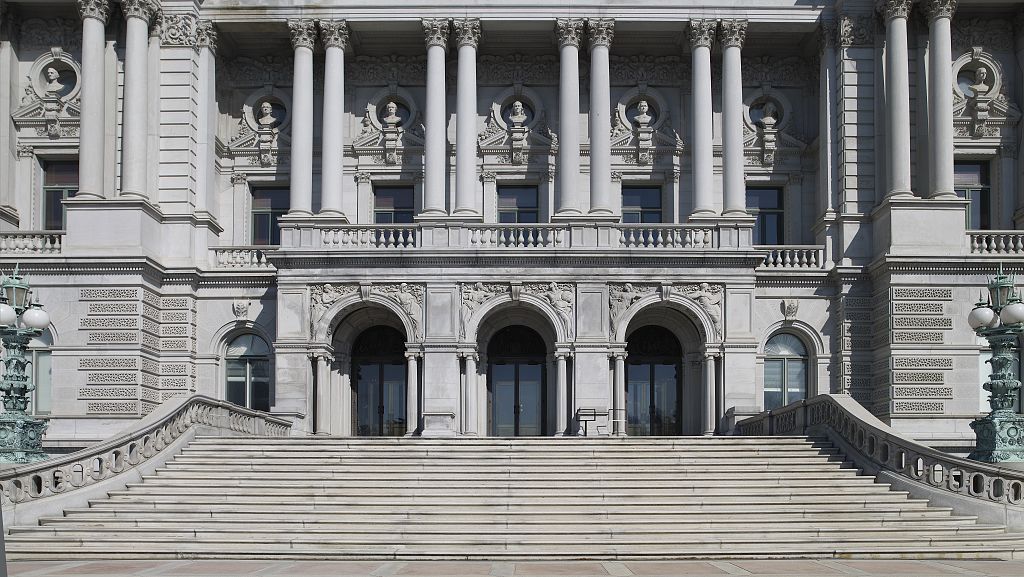
In December 2013 it was added to the National Film Registry, in the same class as Mary Poppins and Roger & Me. EstablishedLoC 2013BBC 2013
The Library of Congress, which keeps the Registry: the Thomas Jefferson Building, 2007. Photo: Carol M. Highsmith. Public domain (Library of Congress). Via Wikimedia Commons. Unmodified.
The criticism
In December 1997, speaking mainly about Jackie Brown but naming Pulp Fiction and Reservoir Dogs too, Spike Lee said Tarantino is “infatuated” with a racial slur, adding that “all African-Americans do not think that word is trendy or slick.” EstablishedVariety 1997 In the film, Tarantino’s own character, Jimmie, uses the slur. Samuel L. Jackson and others defended the usage as reflecting real speech. Established the positions BBC 1998
Academic critics, cited by Kevin Howley, objected to the film’s “homophobia,” its “adolescent attitude toward women” and its “thinly veiled racism” (bell hooks, 1995; Kimball, 1997); others, including Howley and Polan, defend its craft. InterpretationHowley 2004 In 2024 Rosanna Arquette called it “great filmmaking” but said she still has “the issue of, enough with the N-word.” EstablishedVariety 2024
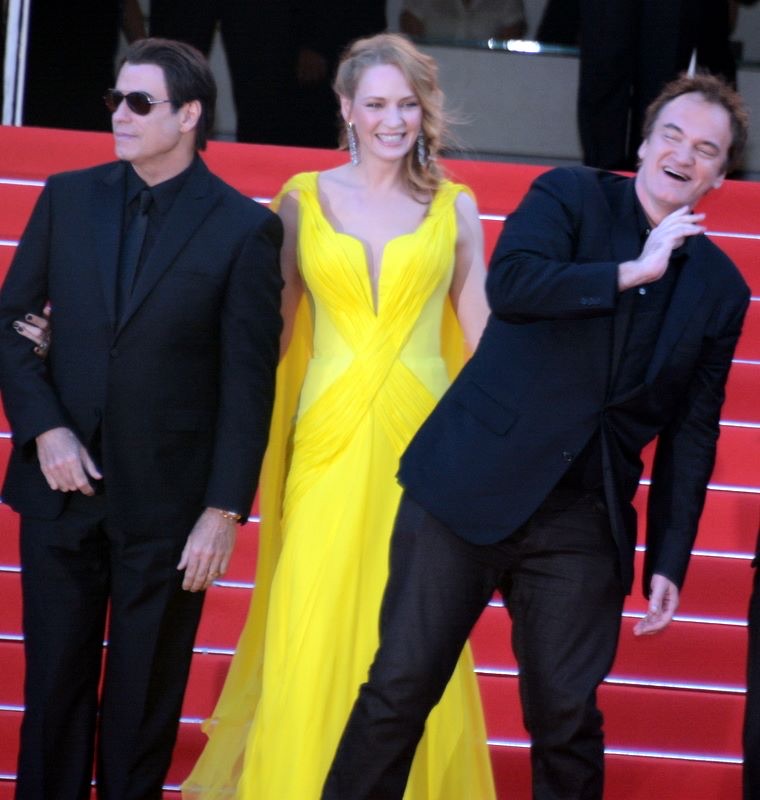
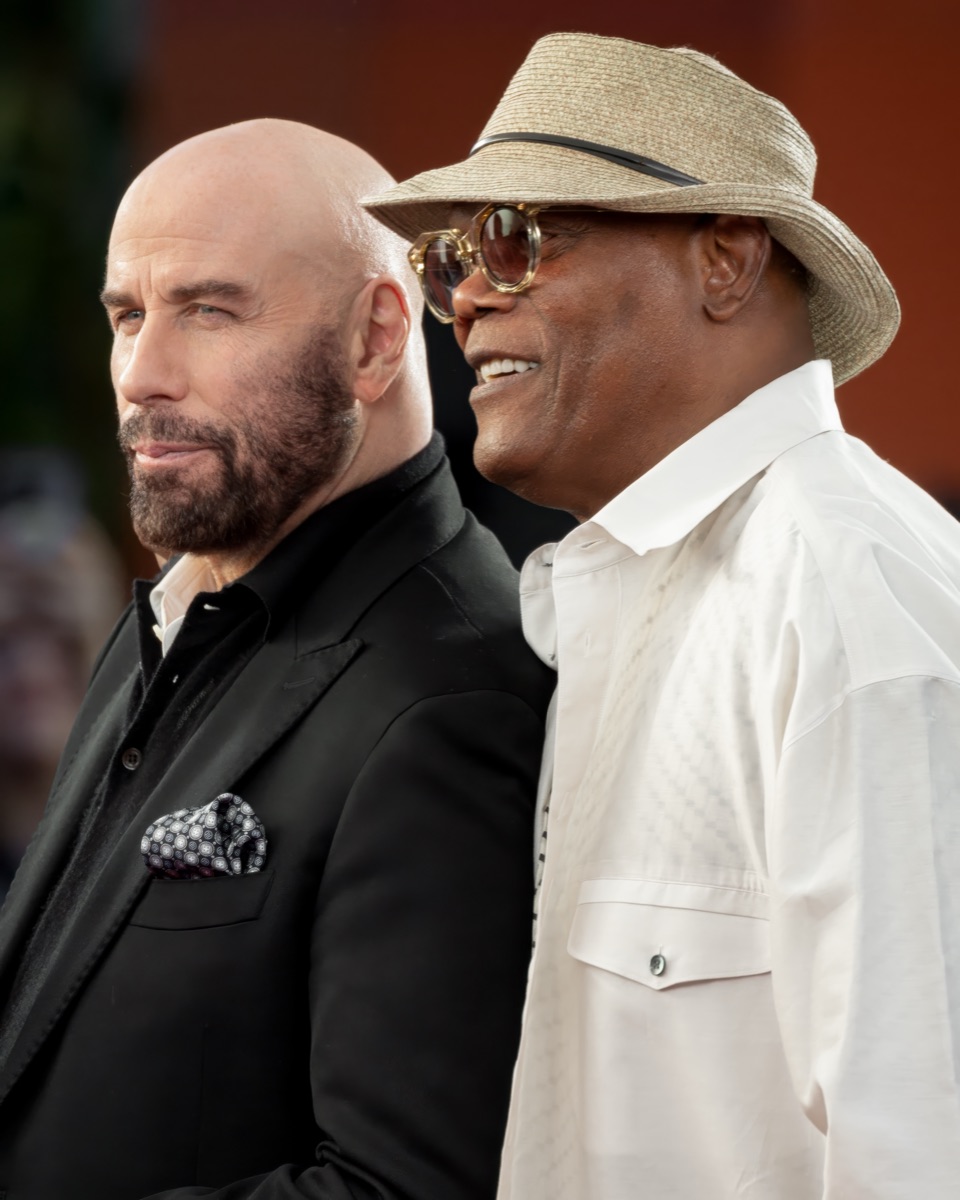
Travolta, Thurman and Tarantino at the Cannes 20th-anniversary tribute, May 2014. Photo: Georges Biard, CC BY-SA 3.0, via Wikimedia Commons. Recompressed.Travolta and Jackson at the 30th-anniversary screening, TCM Classic Film Festival, April 2024. Photo: Ron Raffety, CC BY-SA 2.0, via Wikimedia Commons. Resized.
Coda. Tarantino’s own red 1964 Chevelle Malibu, Vincent’s car, was stolen in 1994 and recovered in April 2013. EstablishedNPR 2013 The details disagree: CBS says “stolen from the set”; others say a ’65, stolen from outside his home. DisputedCBS LATHR
No. 9 · Last orders
Trivia night
Your friend at the bar says…
Sources
Stamps show how each source is used. Oral histories are recollections. Wikipedia was used only to find sources. Photo and font credits: assets/CREDITS.md.
Origins, writing and structure (sections 0–2, the Floor)

.jpg)


_(cropped).jpg)


.jpg)


